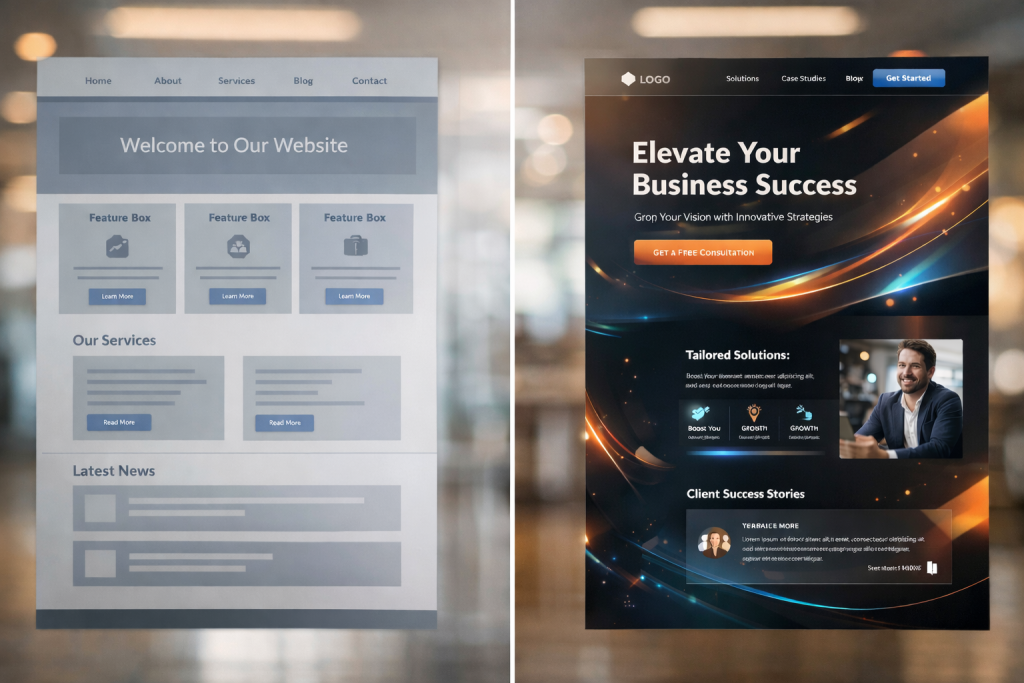

You’ve invested months perfecting your product. You know your ideal client better than anyone. Yet when they land on your website, they leave within seconds—confused, unimpressed, or simply unsure if you’re the right fit. The brutal reality? A generic website repels the exact customers you’re trying to attract. Learning how to plan a website for your business niche isn’t just a marketing exercise—it’s the difference between blending in with thousands of competitors and becoming the obvious choice for your ideal clients.
Key Takeaway
Planning a website for your business niche means creating a strategic blueprint based on your specific audience’s psychology, search behavior, and decision-making triggers. A niche-focused website plan addresses exactly what your ideal customers fear and desire, guiding them from curious visitor to qualified lead without confusion or friction.
Why Generic Website Planning Fails Small Businesses
Most entrepreneurs approach website planning backward. They browse templates, pick one that looks “professional enough,” and then squeeze their content into it like forcing feet into shoes that don’t fit. The result? A website that looks like everyone else’s and speaks to no one specifically.
Consider this: the average person encounters between 6,000 to 10,000 ads and brand messages daily. Your website is competing for attention in a sea of digital noise. If your message sounds generic, your brain gets filtered out automatically. Your potential clients have developed mental ad-blockers—they scan, judge, and move on in under three seconds.
The real problem isn’t lack of effort. It’s lack of strategic planning. You can’t build a website that converts if you haven’t first defined exactly who you’re converting and why they should care.
Deep Audience Research—Beyond Demographics
Before a single pixel is designed or word is written, we must understand who we’re building for. Most business owners stop at surface-level demographics: age, location, income. But niche website planning requires psychological depth.
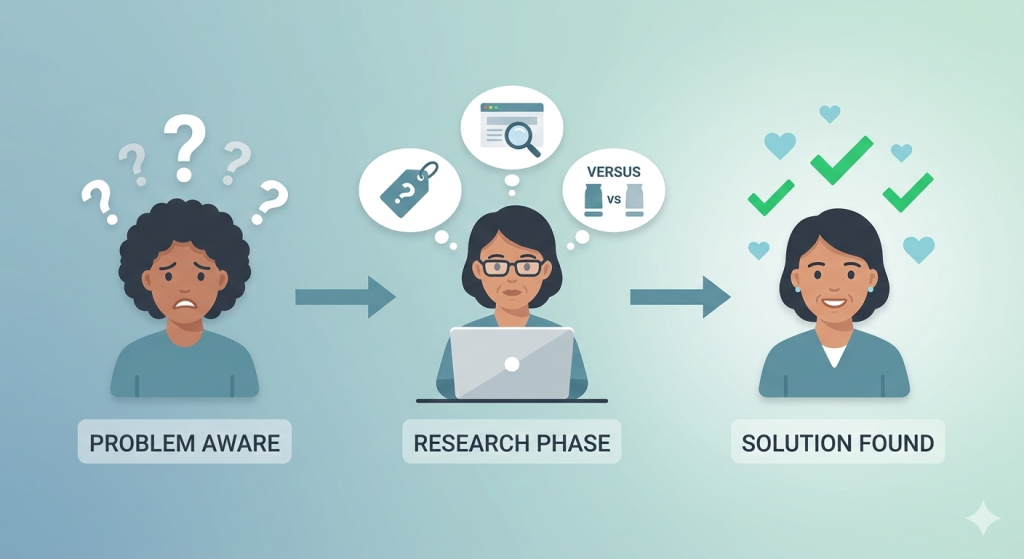
Map the Emotional Journey
Every purchase decision is emotional first, rational second. Your ideal client wakes up with a problem. Throughout the day, that problem nags at them. By evening, they’re searching Google for answers.
Your job is to map this journey:
What keeps them awake at night?
What have they already tried that failed?
What are they afraid will happen if they don’t solve this?
What would solving this problem mean for their life or business?
When we planned a website for a financial advisor specializing in retired teachers, we discovered their clients weren’t just looking for investment advice. They were terrified of outliving their savings and embarrassed about not understanding financial jargon. Every page we built addressed those fears directly. The result? A 40% increase in consultation bookings within three months.
Analyze Search Intent, Not Just Keywords
Generic keyword research tells you what people search. Niche research tells you why they search. Someone searching “roof repair cost” might be comparing prices. Someone searching “how to know if roof leak is emergency” is anxious and needs immediate reassurance. Both searches require different content, different tone, and different calls to action.
The Webiyan 4D Niche Planning Framework
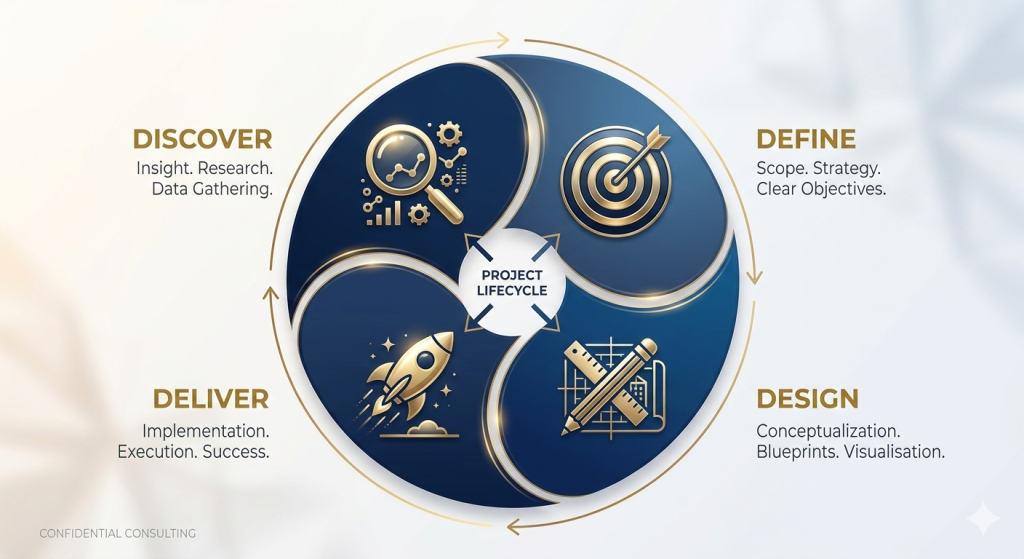
After a decade of building websites for service businesses across dozens of industries, we developed a repeatable system for niche website planning. We call it the 4D Framework, and it ensures no detail is overlooked.
1. Discover—Uncover the Hidden Gaps
We start by auditing three areas:
Your current website analytics: Where are people dropping off? What pages keep them engaged?
Competitor analysis: What are competitors saying? More importantly, what are they not saying that your audience desperately wants to hear?
Client interviews: We talk to your actual happy clients and ask: “What almost stopped you from hiring us?” Their answers reveal objections your website must overcome.
2. Define—Craft Your Niche Positioning
With research complete, we define your unique angle. This isn’t a slogan—it’s a strategic position. For example:
Instead of “general family lawyer,” we might define “divorce attorney specializing in high-conflict custody cases for fathers.”
Instead of “fitness coach,” we might define “postnatal strength specialist for mothers returning to running.”
The narrower you define, the more your ideal clients feel understood. And feeling understood is the gateway to trust.
3. Design—Structure for Decision Making
Niche website design isn’t primarily about colors and fonts. It’s about information hierarchy. We map out:
What does the visitor need to see first to feel they’re in the right place?
What questions will arise in their mind next?
What proof do they need to overcome skepticism?
What final push moves them to action?
For a boutique accounting firm serving e-commerce sellers, we placed client results and testimonials directly next to the services menu. Why? Because e-commerce sellers are skeptical of accountants who don’t understand online sales tax complexity. Seeing proof from similar businesses reduced hesitation and increased contact form submissions by 65%.
4. Deliver—Build for Conversion and Scalability
The final phase is execution with conversion in mind. Every element serves a purpose. Every word earns its place. And we build flexibility for future content expansion because niche authority grows over time through blog posts, case studies, and updated resources.
Want to see how the 4D framework applies to your specific business? Explore our Web Design Services to learn how we build niche-dominant websites that convert.
Content Strategy That Establishes Authority
Your website structure matters, but content is what ranks in Google and convinces visitors you’re the expert. Niche content strategy requires depth over breadth.
Create Pillar Content Around Core Problems
Identify the five biggest questions your ideal clients ask. Then create comprehensive guides answering each one. These become your pillar pages—foundational content that demonstrates deep expertise.
For a commercial cleaning company targeting medical offices, we created pillar content around:
-
Infection control standards for healthcare facilities
-
OSHA compliance for medical practice cleanliness
-
How to choose a medical office cleaning vendor
Each pillar attracted search traffic from facility managers actively seeking solutions. And each pillar positioned the cleaning company as a specialist, not a generalist.
Build Topic Clusters
Around each pillar, we create supporting blog posts that address specific subtopics. This signals to Google that you’re an authority on the subject. It also keeps visitors on your site longer, consuming content that builds trust before they ever contact you.
Use Real Results, Not Generic Claims
Nothing builds authority like proof. Whenever possible, include specific numbers, percentages, or timelines from client work. “Increased organic traffic by 150% in six months” is infinitely more convincing than “we help businesses grow online.”
Phase 4: Technical Foundation for Niche SEO
Even the best content won’t rank without solid technical groundwork. Niche website planning must include:
Keyword Mapping by Page
Each page should target one primary keyword and two to three related secondary keywords. This focus prevents confusion and helps Google understand what each page is about. Your “Emergency Roof Repair” page should not also try to rank for “gutter installation costs.” Create separate pages for separate intents.
Mobile-First Design
Google indexes mobile versions of websites first. If your site isn’t optimized for thumb-friendly navigation on smartphones, you’re invisible in search results. Over 60% of all searches now happen on mobile devices, and for local businesses, that number climbs higher.
Page Speed Optimization
Niche audiences are often impatient. They have urgent problems and zero tolerance for slow loading. Compress images, minimize code, and choose hosting designed for speed. A one-second delay in page load time can reduce conversions by 7%.
Case Study: From Invisible to Industry Authority
A veterinary practice specializing in senior dog care came to us frustrated. They offered exceptional geriatric pet services, but their website attracted mostly puppy owners looking for vaccines. The mismatch wasted their time and disappointed potential clients.
We applied our niche planning approach:
-
Research: We discovered senior dog owners were searching for “caring for elderly dog,” “dog arthritis treatment options,” and “when is it time to say goodbye.” These emotional, specific searches were completely ignored by competitors.
-
Strategy: We built dedicated pages for each concern, including a compassionate guide on end-of-life decisions.
-
Design: We featured photos of senior dogs (not puppies) throughout the site, signaling immediately who this practice served.
-
Results: Within five months, organic traffic increased by 185%. More importantly, calls shifted from “how much for puppy shots” to “my dog is twelve and struggling—can you help?” The practice filled their schedule with exactly the clients they were equipped to serve.
Common Niche Planning Mistakes to Avoid
Even with good intentions, business owners make predictable errors when planning their websites:
Trying to appeal to everyone. When you speak to everyone, you speak to no one. A website that tries to serve both budget-conscious startups and enterprise corporations ends up serving neither.
Hiding your specialization. Some businesses fear niching down will limit opportunities. In reality, specialization attracts higher-paying clients who value expertise. A generalist competes on price. A specialist competes on value.
Prioritizing design over clarity. Beautiful websites that confuse visitors don’t convert. Clear, almost boring websites that guide visitors step by step often outperform flashy designs. Clarity always beats cleverness.
Neglecting the conversion path. A common mistake is assuming visitors will figure out how to contact you. You must explicitly guide them. Every page should have one primary action you want visitors to take, with secondary options available but de-emphasized.
Frequently Asked Questions
How long does it take to plan a niche website properly?
Thorough planning typically takes two to four weeks, depending on your industry complexity and how much audience research already exists. Rushing this phase leads to expensive revisions later.
Do I need a completely custom website for my niche?
Not necessarily. A well-customized template can work if the information architecture, content, and user flow are tailored to your audience. Custom development becomes valuable when your niche requires unique functionality.
How do I know if my niche is too narrow?
If real people are actively searching for your specific service and are willing to pay for expertise, your niche isn’t too narrow. Use keyword research tools to verify search volume exists. A niche with 1,000 highly motivated searchers beats a broad market with 100,000 casual browsers.
Should I redesign my website when entering a new niche?
If your current website targets a different audience, yes. Trying to repurpose content for a new niche confuses both visitors and search engines. A fresh start aligned with your new direction saves time and money long-term.
How often should I update my niche website plan?
Review your website strategy annually. Audience needs evolve, competitors change, and new opportunities emerge. An annual strategic review keeps your site relevant and effective.
Your Niche Website Plan Starts Here
You now understand that planning a website for your business niche isn’t about templates or trends. It’s about deep audience understanding, strategic positioning, and intentional design that guides visitors toward trust and action. The businesses that thrive online aren’t necessarily the biggest—they’re the clearest. They know exactly who they serve and communicate that unmistakably.
we’ve helped dozens of service-based businesses transform generic websites into niche-dominant client acquisition tools. We combine strategic planning with expert execution to build sites that rank, convert, and establish lasting authority.
Ready to build a website that speaks directly to your ideal clients?
Request your free website audit and consultation today