You’ve probably typed “how much does a website cost” into a search bar, only to find prices ranging from “free” to “the price of a luxury car.” It’s frustrating, confusing, and leaves you no closer to making a confident decision for your business. The truth is, asking how much a website costs is like asking how much a vehicle costs—you can get a bicycle, a reliable family sedan, or a fully-loaded commercial truck. The right answer depends entirely on what you need it to do.
In this guide, we will cut through the noise. By the end of this article, you won’t just know what things cost; you’ll understand why they cost what they do, what hidden fees to watch out for, and exactly how to invest in a site that drives real leads and revenue.
Quick Answer: What is the Real Cost of a Website in 2026?
If you are a small business owner looking for a professional, conversion-focused website in 2026, expect to pay between $10,000 and $35,000 upfront for an agency-built site. A DIY website builder (like Wix or Squarespace) will cost roughly $20–$50 per month but requires significant time and lacks custom strategy. A custom WordPress site built by a freelancer might range from $2,000 to $8,000, while an enterprise-level eCommerce solution can easily exceed $50,000. The “cheapest” option is rarely the most profitable when you factor in your time and lost sales .
Why Your Website Cost Varies So Much (The 2026 Landscape)
To understand the investment, you have to look under the hood. The price tag isn’t just about lines of code; it’s about business outcomes. In 2026, a website is your 24/7 sales team, your credibility marker, and often a customer’s first impression of your brand. According to research cited by the CXL Institute, 94% of first impressions are design-related . You aren’t just paying for aesthetics; you are paying for that split-second trust signal.
The cost is determined by three main factors: the scope of features, the expertise of the people building it, and the ongoing infrastructure required to keep it fast and secure. Let’s break down the specific paths you can take.
The Three Paths to a Website: Pricing and Trade-offs
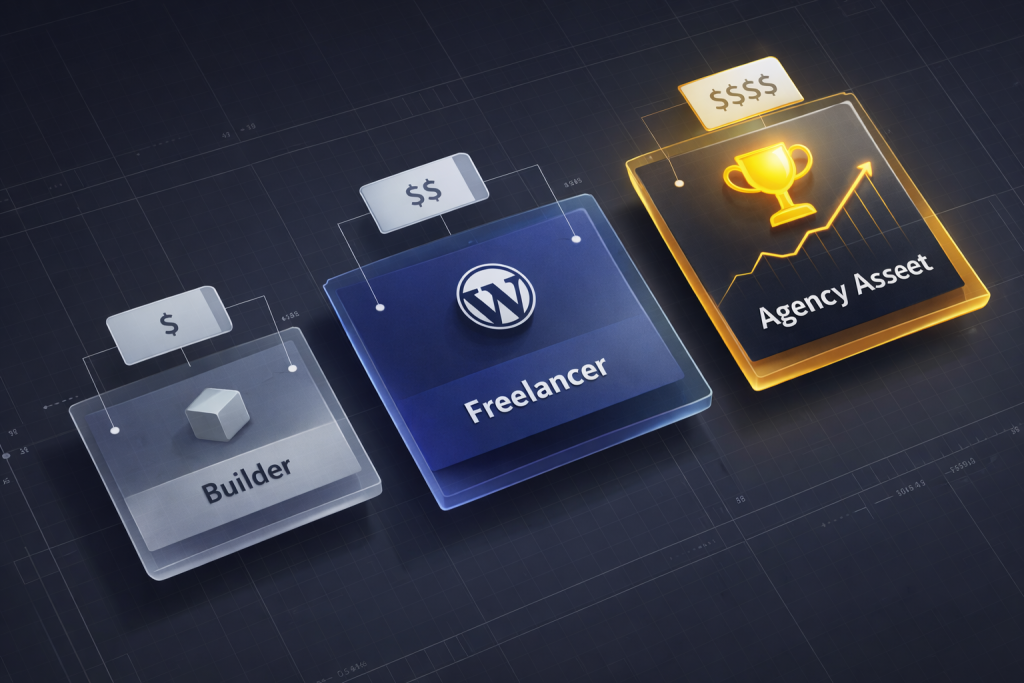
Every business owner faces the same fork in the road. Do you build it yourself, hire a freelancer, or partner with an agency? Here is the real cost of each path in 2026.
1. The DIY Route: Website Builders (SaaS)
Platforms like Wix, Squarespace, and Shopify are enticing. They offer drag-and-drop simplicity and an all-in-one monthly price.
Upfront Cost: Low ($0–$300 for the first year).
Monthly Cost: $16–$50+ per month for the plan, plus transaction fees if you sell products .
The Hidden Cost: Your Time. You will spend dozens of hours learning the platform, troubleshooting layout issues, and writing copy. Furthermore, you are “renting” your online presence. If you stop paying, your site disappears. Customization is limited, and migrating away later is difficult .
2. The Flexible Route: WordPress with a Freelancer
WordPress powers over 43% of the web because it offers total ownership and scalability . When paired with a freelancer or a small agency using a powerful visual builder, you get a professional look without enterprise-level coding.
Upfront Cost: $2,000–$8,000 for a standard business site .
Monthly Cost: $30–$100 for managed hosting, security, and premium plugins.
The Value: You own your site outright. This route allows for custom functionality and integration with your specific marketing tools.
3. The Premium Route: Professional Agency (Custom Design & Strategy)
This is where we operate. Hiring a conversion-focused web design agency means you aren’t just paying for a layout; you are investing in a strategy to turn visitors into paying customers. We build for speed, SEO architecture, and lead generation from day one.
Upfront Cost: $10,000–$35,000+ for a small business website . Complex eCommerce or custom web apps can range from $50,000 to $150,000+ .
Monthly Cost: $200–$1,000+ for retainer services (maintenance, SEO, content updates).
The Value: Predictable results. You get a dedicated strategist, a designer, and a developer working together to solve your specific business problems.
The Investment Breakdown: Where Does the Money Go?
If you decide to build a professional site, it’s helpful to know what you’re actually paying for. A transparent agency will break down the estimate into these core components:
Design & User Experience (UI/UX)
This is the blueprint. It’s more than just colors; it’s about mapping the user journey so visitors naturally move toward your call-to-action (like calling you or filling out a form). In 2026, users expect immersive, fast, and accessible experiences. Good design accounts for roughly 20-25% of the project budget .
Development & Functionality
This is the engineering. It involves bringing the design to life with clean code, integrating your CRM, setting up booking systems, or building a custom eCommerce checkout. Complex features like multi-vendor marketplaces or API integrations drive costs up .
Content & Copywriting
A beautiful design without persuasive words rarely sells. Professional copywriting that speaks directly to your target audience’s pain points is an investment that pays for itself. High-converting copy requires research and strategy, not just filler text.
The Infrastructure Stack
A fast website isn’t a luxury; it’s a ranking factor and a conversion necessity. Your investment goes toward premium hosting (like Kinsta or WP Engine), SSL certificates, and security monitoring. A slow site on cheap hosting will kill your conversions, no matter how good it looks .
The Iceberg Effect: Don’t Ignore Ongoing Costs
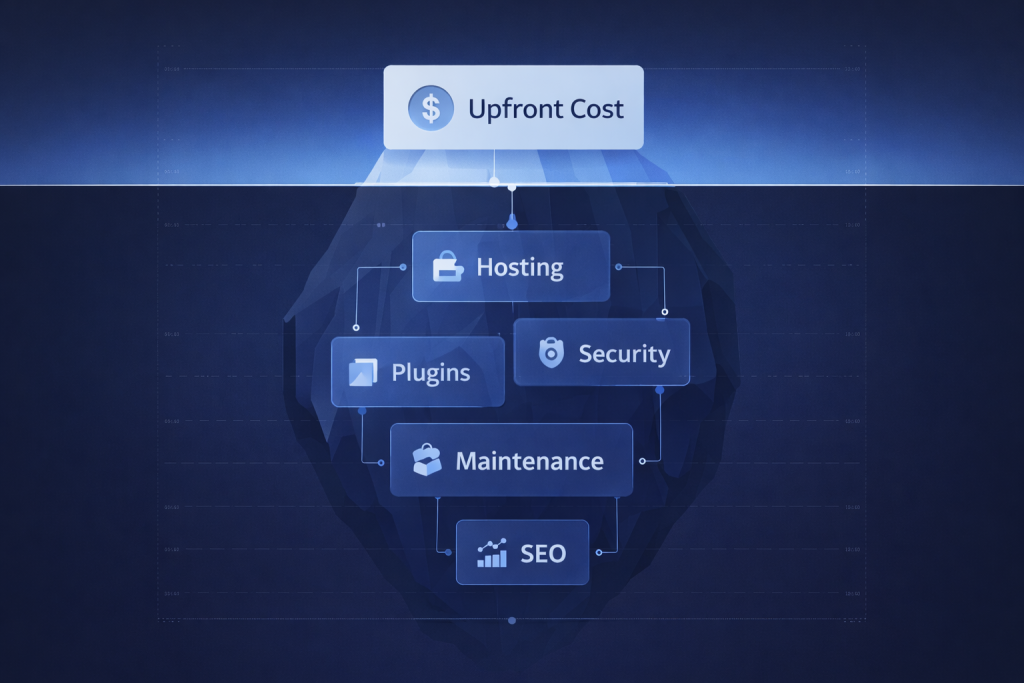
Many business owners are blindsided by the costs that kick in after the site launches. To keep your digital asset secure and high-performing, you must account for:
Hosting: Shared hosting ($5–$15/mo) vs. Managed WordPress hosting ($30–$250/mo) .
Plugins & Software: Premium plugin licenses for SEO, security, and backups can cost $200–$800+ per year .
Maintenance: Security updates, bug fixes, and daily backups. If you don’t do this, your site is vulnerable to hacks.
Marketing: A website with no traffic is just an online brochure. Budget for SEO, content marketing, or ads to drive visitors.
Pro Tip: Always ask potential partners for the total cost of ownership for the first 12 months, not just the design fee.
Real Results: The ROI of Investing in Quality
We recently worked with a local service provider who initially went the DIY route. They spent weeks building a site on a popular builder, only to find their traffic stagnant and their phone silent. They came to us frustrated, having wasted months of valuable time.
We conducted a full SEO and conversion audit. We rebuilt their site on WordPress using a lightweight, code-optimized framework focused on local search intent and clear calls-to-action.
The result? Within six months, their organic traffic increased by over 265%, and their page load speed dropped from a sluggish 5.2 seconds to a blazing 1.8 seconds. More importantly, their qualified lead inquiries jumped by 162% . They didn’t just get a new website; they got a new customer acquisition engine. This is the difference between paying for a feature and investing in an asset.
Our Agency’s Framework: The Conversion-First Methodology
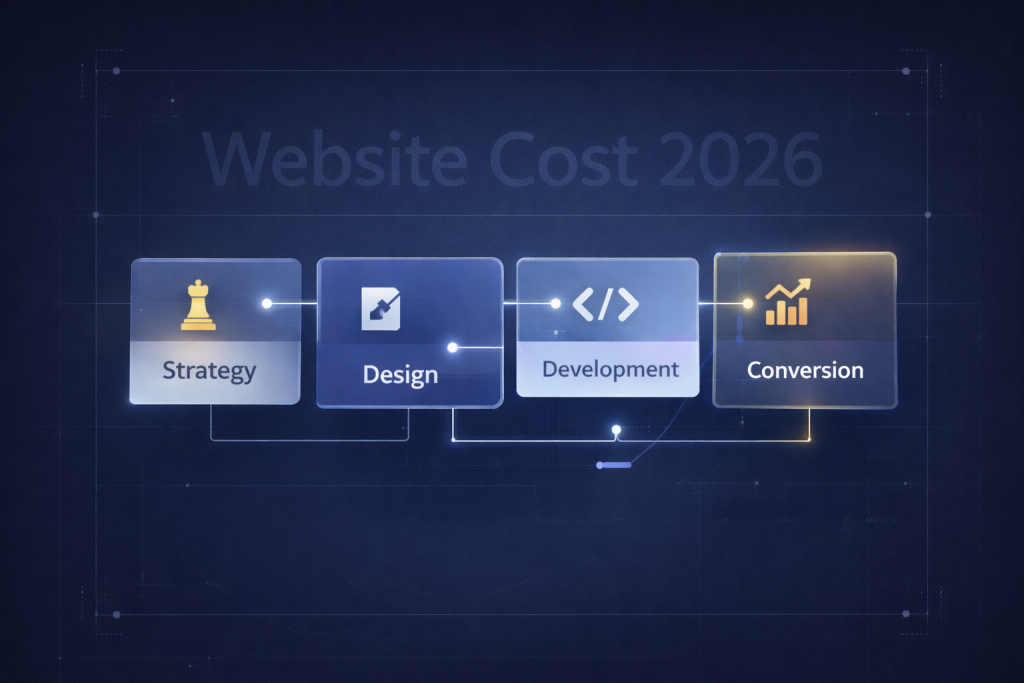
We don’t just build websites that look pretty; we build sites that work. Our proprietary “Conversion-First Methodology” is how we ensure your investment pays off. It’s a four-phase process designed to eliminate guesswork:
-
Discovery & Validation: We don’t write a single line of code until we understand your customers, your competition, and your revenue goals. We map out the user journey to remove friction points.
-
SEO Architecture & Strategy: We build the technical foundation for Google. This includes semantic keyword structure, schema markup, and a site hierarchy designed to establish topical authority.
UX Design & Persuasive Copy: We design for the user, using visual hierarchy and psychology-driven copy to guide visitors toward conversion.
-
Performance Optimization & Launch: We launch on enterprise-grade infrastructure to ensure your site is the fastest in your niche, then continuously monitor performance.
Comparison: How to Choose Your Path
To help you visualize the best route for your business, here’s a simple comparison:
| Feature | DIY Builder (SaaS) | Freelancer (WordPress) | Agency (Our Approach) |
|---|---|---|---|
| Best For | Hobbyists, Solopreneurs | Startups, Small Businesses | Growth-focused SMBs |
| Design Quality | Template-based | Good, but variable | Strategic & Custom |
| SEO Foundation | Basic | Moderate | Advanced & Built-in |
| Conversion Strategy | DIY (Guesswork) | Limited | Core Focus |
| Time Investment | High (You do the work) | Low | Zero (We handle it) |
| Ownership | You “rent” it | You own it | You own it |
| Upfront Cost | $0–$500 | $2k–$8k | $10k–$35k+ |
| Long-Term Value | Low | Medium | High (Revenue Asset) |
Frequently Asked Questions
Can I build a professional website for under $5,000?
Yes, but usually with significant trade-offs. You might find a freelancer willing to build a simple 3-5 page brochure site at this price point. However, this typically excludes in-depth strategy, professional copywriting, and robust SEO setup. For a site that actively generates leads, the $10k–$20k range is where you start seeing a return on investment.
Why do agencies charge more than freelancers?
Agencies charge for a team, not just an individual. When you hire an agency like ours, you get a project manager to keep things on track, a strategist to analyze your market, a designer to create the visuals, and a developer to build it—plus the accountability of an established business. This team structure reduces risk and delivers a higher-quality result.
How much does eCommerce website cost?
An eCommerce site is more complex due to payment gateways, product databases, and shipping logic. A basic online store on a platform like Shopify might cost $3,000–$10,000 to set up professionally, while a custom-built WooCommerce or Adobe Commerce site with complex functionality typically ranges from $15,000 to $100,000+ .
How long does it take to build a website?
A professional agency build typically takes 6 to 12 weeks from kickoff to launch. This timeline allows for proper strategy, design revisions, content development, and thorough testing. DIY builders can be “launched” in a weekend, but the strategy is often missing.
Conclusion: Ready to Build an Asset, Not an Expense?
Investing in a website is one of the most critical decisions you’ll make for your business. While the sticker shock for a professional site can be real, the cost of a site that doesn’t convert is far greater. You need a partner who understands how to blend beautiful design with the technical rigor required to rank on Google and the psychology needed to win customers.
If you are tired of trying to piece together templates and plugins, or if your current site just isn’t delivering the calls and emails it should, let’s talk.
Don’t leave your digital storefront to chance.
Click Here to Book Your Free Consultation & Website Audit
Our team will analyze your current online presence (or lack thereof) and provide a roadmap for how we can build a lead-generating machine tailored specifically to your business goals. Let’s build something that works.